In the evolving landscape of global logistics, infrastructure development, and heavy manufacturing, the demand for adaptable material handling solutions has never been higher. While traditional overhead cranes and rail-mounted systems have served the industry for decades, the Rubber Tyred Gantry (RTG) crane has emerged as the definitive champion of operational flexibility.
But what exactly separates the rubber tyred gantry crane from its rail-bound or fixed counterparts? It isn’t just the presence of rubber tires; it is the fundamental shift in operational philosophy from “fixed-path” to “surface-independent” movement. In this article, we will explore the multifaceted reasons why RTG cranes offer unparalleled flexibility across ports, precast concrete yards, steel distribution centers, and wind energy projects.
1. Autonomous Mobility: Breaking the Chains of Rails
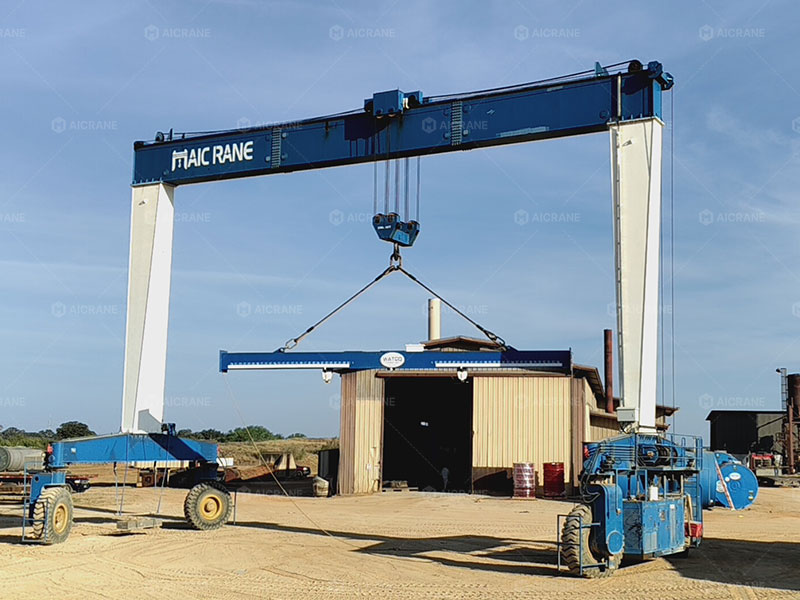
The most immediate advantage of an RTG crane is its independence from fixed infrastructure. Rail mounted gantry cranes are, by definition, tethered to a specific track. If a project expands or the yard layout needs to change, the RMG becomes a stranded asset unless expensive new rails are laid.
In contrast, an RTG crane operates on compacted gravel or asphalt surfaces. This mobility allows for:
-
Cross-Yard Travel: An RTG can move from “Bay A” to “Bay B” without needing a connecting track.
-
Deployment Versatility: One day it can be used for stacking containers, and the next, it can be driven to a different section of the facility to load oversized steel girders onto trucks.
-
Relocation Ease: If a company moves to a new facility, the RTG can often be disassembled and transported much more easily than a rail-based system, preserving the capital investment.
2. Dynamic Steering Modes and Maneuverability
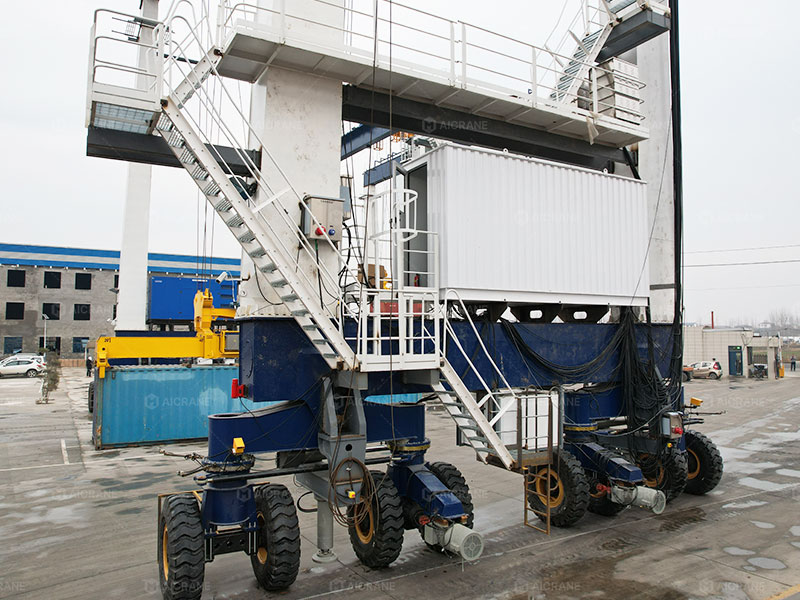
The flexibility of an RTG is significantly enhanced by its sophisticated steering systems. Modern RTGs are not limited to simple forward and backward motion. Through advanced hydraulic or electric steering motors, they can achieve:
-
Carousel Steering: The crane can rotate 360° on its own axis, allowing it to turn around in tight industrial spaces.
-
Crab Steering: The wheels turn 90 degrees, allowing the crane to move sideways. This is crucial for navigating narrow aisles or positioning the crane precisely over a load.
-
Diagonal Travel: Moving at an angle to reach specific points faster.
This level of maneuverability is impossible for overhead bridge cranes or RMGs, making the RTG the ideal choice for irregular yard shapes where “straight-line-only” movement would lead to massive dead space.
3. Adaptability to Diverse Industrial Sectors
While the term “RTG” is often synonymous with port terminals, its flexibility has allowed it to dominate non-maritime industries. Other gantry systems are often specialized for one type of load, but the RTG is a multi-purpose workhorse:
-
Precast Concrete Industry: RTGs are used to lift massive bridge segments and concrete piles. Because these yards change shape as production grows, the RTG’s ability to “follow the work” is vital.
-
Wind Energy: Handling wind turbine blades—which can exceed 80 meters in length—requires synchronized lifting. Two mobile RTGs can work in tandem to move these awkward loads across a vast assembly area, a feat that would require a prohibitively expensive rail network for RMGs.
-
Steel and Heavy Manufacturing: Whether it’s steel coils, plates, or heavy machinery, the RTG can be equipped with various attachments (magnets, C-hooks, or specialized spreaders) to handle different materials within the same shift.
4. Scalability and Modular Growth
For a growing business, an RTG system offers a “pay-as-you-grow” model that other gantry systems cannot match. If you install an overhead crane, you are limited by the strength and length of the building’s steel structure. If you install an RMG, you are limited by the track length.
With RTGs, if your volume increases, you simply add another mobile gantry unit to the fleet. There is no need for major civil engineering works or shutting down the facility to install new rails. This modular approach to capacity allows terminal and yard managers to respond to market fluctuations in real-time without the risk of over-investing in permanent infrastructure.
5. Optimized Space Utilization
Flexibility also manifests in how the crane interacts with the yard’s “real estate.” Because an RTG does not require a dedicated rail path (which often acts as a “no-go” zone for other vehicles), the ground space is more multipurpose.
Furthermore, modern RTGs are designed with different spans (the width between the legs). A “1-over-6” RTG can stack containers six high and span seven rows wide. This high-density stacking capability, combined with the ability to “change lanes” at will, allows for a much more fluid use of space compared to fixed cranes that can only access what is directly beneath their bridge.
6. Maintenance and Operational Continuity
In a rail-mounted system, if the rail is damaged or the power busbar fails, the entire crane (and often the entire row) is out of commission. Maintenance often requires blocking off the track, halting operations for other equipment.
An RTG provides superior operational continuity:
-
Off-Line Maintenance: If an RTG needs a service, it can be driven to a dedicated maintenance bay, leaving the work area clear for other mobile equipment to continue operations.
-
Power Independence: Many RTGs are powered by onboard diesel-electric generators. This means they are not affected by site-wide power outages or cable reel failures, providing a layer of redundancy that is critical for 24/7 operations.
7. Future-Proofing via Automation and Electrification
Finally, the RTG is proving to be more flexible in the face of the “Green Revolution.” Early critics pointed to diesel emissions as a drawback, but the modern eRTG (Electric Rubber Tyred Gantry) has solved this.
Today’s RTGs can be configured to run on:
-
Pure Diesel: For maximum mobility in remote sites.
-
Hybrid Systems: Using battery storage to capture energy from lowering loads (regenerative braking).
-
Cable Reels or Busbars: For zero-emission operation in high-density areas, with the ability to disconnect and switch to a small diesel engine for yard-to-yard transfers.
This “energy flexibility” ensures that an investment in an RTG today will still be compliant with environmental regulations in 2030 and beyond.
Conclusion
The flexibility of an RTG crane is a sum of its parts: its independence from rails, its sophisticated steering, its multi-industry utility, and its modular nature.
While RMGs and overhead cranes will always have their place in high-speed, fixed-path environments, the RTG is the superior choice for any operation that values adaptability. In an era where industrial requirements change overnight, the ability to move your primary lifting asset wherever it is needed—regardless of tracks or buildings – is not just a convenience; it is a significant competitive advantage.
Whether you are managing a bustling port or a specialized precast plant, the RTG crane provides the freedom to design your workflow around your needs, rather than designing your needs around the limitations of your crane.