For contractors, equipment investment decisions directly affect project profitability. When evaluating a self-loading concrete mixer price, companies should consider not only the initial purchase cost but also the long-term savings created by higher efficiency, lower labor requirements, and reduced transportation expenses. Compared with traditional concrete production methods that require separate machines for loading, mixing, and delivery, a self-loading concrete mixer combines multiple functions into one unit and helps contractors control overall construction costs.
The self-loading concrete mixer price(autohormigonera precio) varies depending on factors such as machine capacity, configuration, automation level, and after-sales support. However, the lowest purchase price does not always mean the lowest project cost. Contractors need to evaluate the total ownership value of the equipment, including fuel consumption, maintenance requirements, productivity, and service life.
By choosing the right self-loading concrete mixer, construction companies can reduce unnecessary expenses while improving operational flexibility. This makes the equipment a popular solution for road construction, residential projects, mining infrastructure, and rural development projects in different regions.
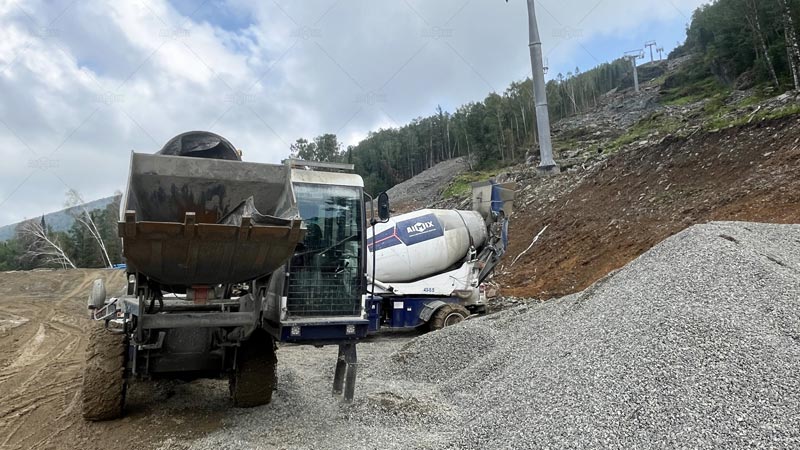
What Factors Affect Self-Loading Concrete Mixer Price?
Many contractors compare different equipment models based on price, but several technical and operational factors influence the final investment. Understanding these factors helps buyers select equipment that matches their project requirements.
Machine Capacity and Production Requirements
Capacity is one of the most important factors affecting self-loading concrete mixer price. Larger machines usually provide higher concrete output and are suitable for large-scale projects, while smaller models may be more economical for residential construction and small infrastructure works. Contractors should choose capacity according to daily concrete demand instead of simply selecting the cheapest option.
Configuration and Technology Features
Different configurations can influence equipment costs. Features such as automatic weighing systems, intelligent control panels, four-wheel drive systems, and improved mixing performance may increase the initial investment but can improve efficiency and reduce operating costs over time.
Quality, Service, and Long-Term Reliability
A lower self-loading concrete mixer price may not always provide the best value if equipment quality and service support are limited. Reliable components, technical assistance, and spare parts availability can help reduce downtime and maintenance expenses throughout the machine lifecycle.
How Self-Loading Concrete Mixers Reduce Total Construction Costs
Although the purchase price is an important consideration, the main economic advantage of a self-loading concrete mixer(principal ventaja económica de una auto hormigonera) comes from reducing total project expenses. The equipment allows contractors to complete more tasks with fewer resources.
Reducing the Need for Multiple Machines
Traditional concrete production usually requires a loader, concrete mixer, and transportation equipment. Each additional machine increases investment costs, fuel consumption, maintenance requirements, and operator expenses. A self-loading concrete mixer integrates these functions into one machine, helping contractors reduce equipment costs and simplify job site management.
Lowering Labor and Transportation Expenses
A self-loading concrete mixer can complete material loading, mixing, and concrete transportation with fewer workers. At the same time, producing concrete directly at the construction site reduces dependence on external suppliers and lowers transportation costs, especially for projects located far from urban areas.
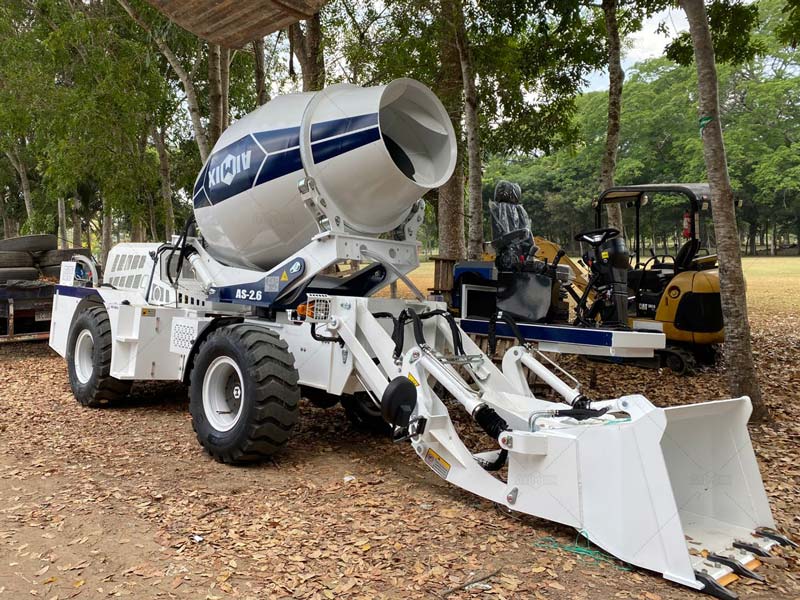
Is a Higher Self-Loading Concrete Mixer Price Worth the Investment?
Some contractors focus only on finding the lowest equipment price, but a higher-quality machine can provide better economic returns over time. The right investment should be measured by productivity improvements and cost savings throughout the equipment’s service life.
Improving Project Efficiency and ROI
A reliable self-loading concrete mixer helps contractors maintain continuous concrete production and reduce construction delays. Faster operation, lower labor demand, and reduced logistics costs can improve project profitability and shorten investment recovery periods.
Adapting to Different Construction Environments
Different regions require different equipment solutions. For example, a self-loading concrete mixer in Chile(autohormigonera en Chile) can help contractors handle projects in mountainous areas where transportation conditions increase concrete delivery challenges. Producing concrete directly at the job site improves flexibility and reduces additional logistics expenses.
Choosing the Right Mixer Based on Regional Project Needs
Construction conditions vary across Latin America, so contractors should consider local terrain, project scale, and material supply conditions when evaluating equipment options. A suitable machine configuration can provide better cost performance than simply choosing the lowest-priced model.
Applications in Peru’s Remote Construction Projects
For contractors working in remote regions, a self-loading concrete mixer Peru solution(una solución de autohormigonera Perú) can improve construction efficiency by providing on-site concrete production. This is especially useful for rural roads, infrastructure projects, and areas where ready-mix concrete transportation is difficult or expensive.
Balancing Initial Investment and Operating Costs
When comparing self-loading concrete mixer price options, contractors should calculate both short-term investment and long-term operating expenses. Factors such as fuel efficiency, maintenance frequency, machine durability, and technical support all influence the real cost of ownership.
How Contractors Can Maximize Equipment Value
To achieve better returns from a self-loading concrete mixer investment, contractors should focus on proper equipment selection, operator training, and regular maintenance. These practices help improve machine performance and extend service life.
- Select equipment capacity based on actual project requirements.
- Choose suppliers that provide technical support and spare parts assistance.
- Train operators to improve productivity and reduce operation errors.
- Follow recommended maintenance schedules to prevent unexpected downtime.
As construction companies continue to focus on cost control and operational efficiency, understanding self-loading concrete mixer price becomes increasingly important. The best investment is not always the machine with the lowest purchase cost, but the one that delivers reliable performance, lower operating expenses, and higher value throughout the entire project lifecycle.