Remote municipal road projects often face a problem that is easy to underestimate: asphalt supply can be harder to manage than road construction itself. A project may need only a moderate amount of hot mix asphalt, but the nearest commercial plant could be dozens or even hundreds of kilometers away. Long hauling distances increase fuel use, delivery time, truck requirements, and the risk of temperature loss.
At the same time, municipal road budgets require careful cost control. Contractors need enough asphalt to keep the paving crew working, but they also want to avoid investing in production capacity that will remain unused.
For these projects, a small asphalt plant can be a practical option. However, plant size alone should not determine the decision. The right solution depends on daily asphalt demand, project duration, road access, aggregate availability, fuel supply, hauling distance, and future project plans.
In other words, the key question is not simply “How small can the asphalt plant be?” The better question is “Can the plant produce enough asphalt near the project without creating unnecessary cost or logistical problems?”
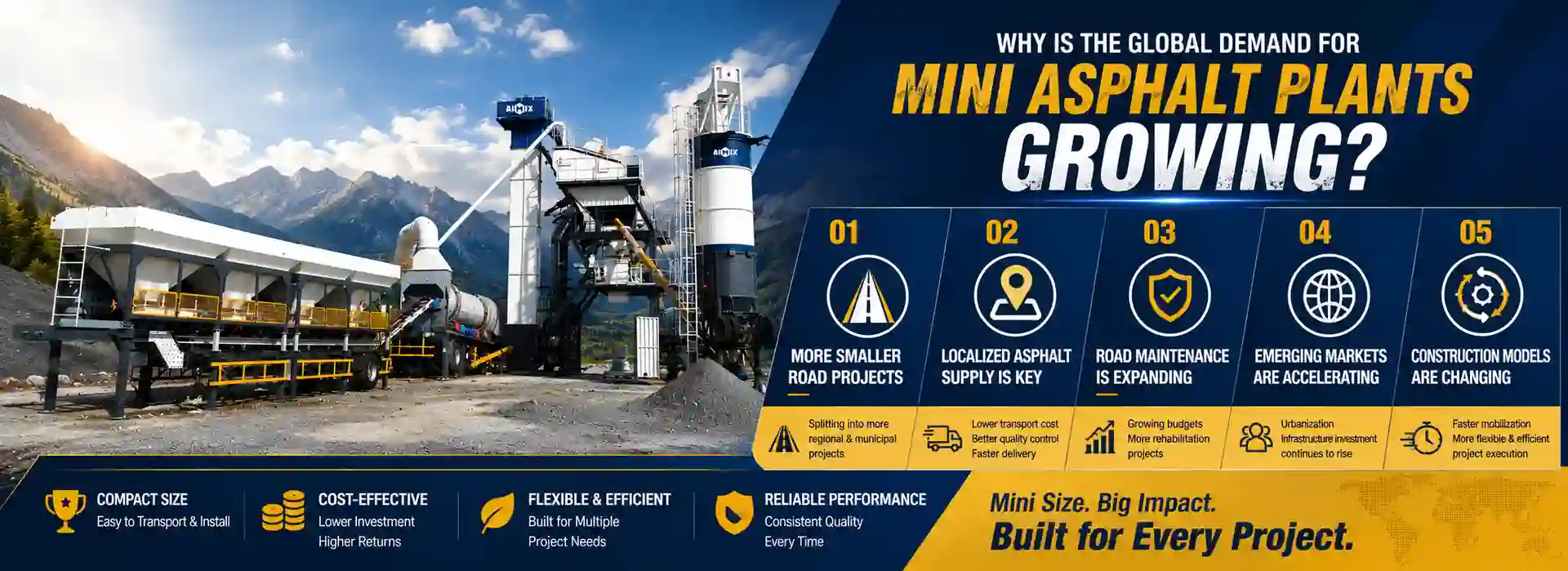
Why Remote Municipal Road Projects Need A Different Asphalt Supply Strategy
Before choosing equipment, it helps to understand why remote road projects differ from urban projects. In a large city, contractors can often purchase asphalt from established commercial plants. These plants may serve several projects every day. Road sites may also have better truck access and shorter delivery distances.
Remote municipal projects often have fewer advantages. Therefore, the asphalt production strategy needs to respond to local conditions rather than follow a standard urban model.
Long Hauling Distances Can Become A Major Cost
When asphalt travels a long distance, transportation becomes an important part of the delivered cost. More trucks may be needed to maintain a continuous paving operation. The contractor also spends more on fuel, drivers, truck maintenance, and waiting time.
Temperature management creates another concern. Asphalt must reach the paving site in suitable condition for placement and compaction. A long journey increases exposure to traffic delays, weather, and cooling.
For this reason, producing asphalt closer to the construction site can have a practical advantage when the project has enough demand to justify local production.
Remote Roads Often Have Limited Infrastructure
A remote municipal road may have narrow access roads, limited electricity, difficult terrain, or weak supporting infrastructure. These conditions can make a large permanent production facility difficult to install and operate.
A compact asphalt production solution can reduce some of these logistical challenges. However, the plant still needs enough space for aggregate storage, fuel supply, asphalt handling, truck circulation, maintenance, and safe operation.
Therefore, equipment selection should follow the actual project conditions. The plant should fit the site, production schedule, and logistics plan rather than simply match a nominal capacity target.
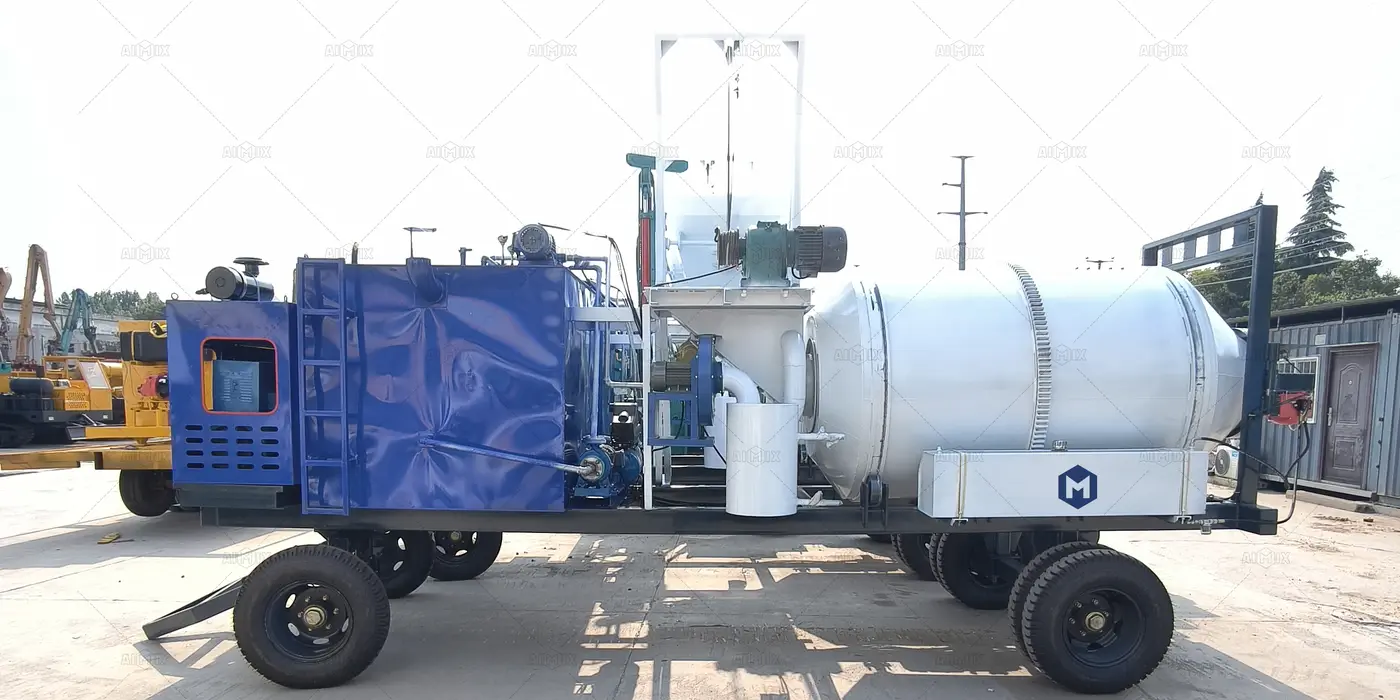
What Makes A Small Asphalt Plant Suitable For Remote Projects?
A small asphalt plant generally makes the most sense when the project does not require continuous high-volume production. Rural road construction, municipal road rehabilitation, local access roads, and phased maintenance projects are common examples.
However, “small” should not mean “underpowered.” The plant still needs to meet the practical production requirement of the paving operation.
Moderate Daily Asphalt Demand
Suppose a municipal project needs around 300 tonnes of asphalt per day. A plant rated at 40 tonnes per hour would theoretically need 7.5 hours of full production to reach that quantity.
Actual production will normally differ from the theoretical figure. Startup, aggregate feeding, mix changes, maintenance, truck loading, quality checks, and unexpected interruptions all consume time.
Therefore, contractors should use realistic daily output when selecting equipment. A plant should have enough practical capacity to support the paving schedule without requiring continuous operation at its absolute limit.
Short-To-Medium Project Duration
A small plant becomes more attractive when the project has a defined production period. For example, a contractor may need regular asphalt production for several months while completing a rural road upgrade.
In this situation, the contractor can compare the cost of deploying a plant with the cost of repeatedly purchasing and transporting asphalt from a distant supplier.
If the project lasts only a few days, owning or installing an asphalt plant may not make economic sense. On the other hand, a multi-month project with regular asphalt demand can provide more opportunity to recover equipment and setup costs.
Local Aggregate Availability
Aggregate is one of the most important inputs in asphalt production. A remote project may have suitable crushed stone nearby. Another project may need aggregate to travel a long distance before it reaches the plant.
If suitable aggregate is available locally, local asphalt production can become more attractive. The contractor can reduce the distance between raw material supply, asphalt production, and paving.
Nevertheless, proximity alone is not enough. The aggregate still needs to meet the project’s technical requirements and approved mix design.
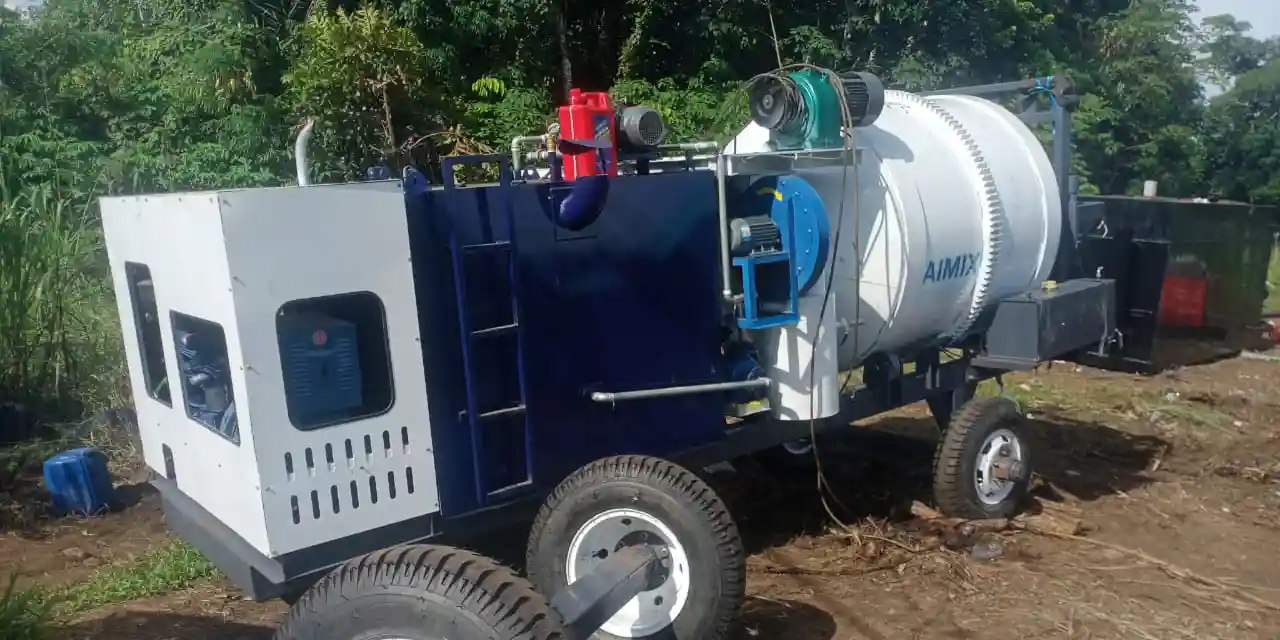
How Should Contractors Match Plant Capacity With Road Demand?
The next step is to calculate the project’s actual asphalt requirement. This gives the contractor a more reliable basis for selecting an asphalt mix plant than simply choosing equipment based on a general project size.
The calculation should start with the road area, asphalt thickness, expected mixture density, and construction schedule. It should then connect those numbers with the actual paving rate.
Start With Road Area And Asphalt Thickness
Contractors can estimate asphalt volume using the following basic relationship:
Asphalt volume = road length × paved width × compacted thickness
The estimated volume can then be converted into approximate tonnage using the expected asphalt mixture density. The final requirement should follow the approved mix design and project specifications.
For example, consider a 5 km municipal road with a 6 m paved width and a 50 mm compacted asphalt layer.
The approximate compacted volume would be:
5,000 m × 6 m × 0.05 m = 1,500 m³
If the mixture density is approximately 2.35 t/m³, the theoretical asphalt mixture requirement would be around:
1,500 m³ × 2.35 t/m³ = 3,525 tonnes
This is only a planning estimate. Actual quantities depend on the approved mixture, layer structure, construction tolerances, compaction, and site conditions.
The example also shows why project duration matters. A plant that is suitable for producing 3,500 tonnes over several weeks may not be suitable if the municipality requires the same quantity within a very short paving window.
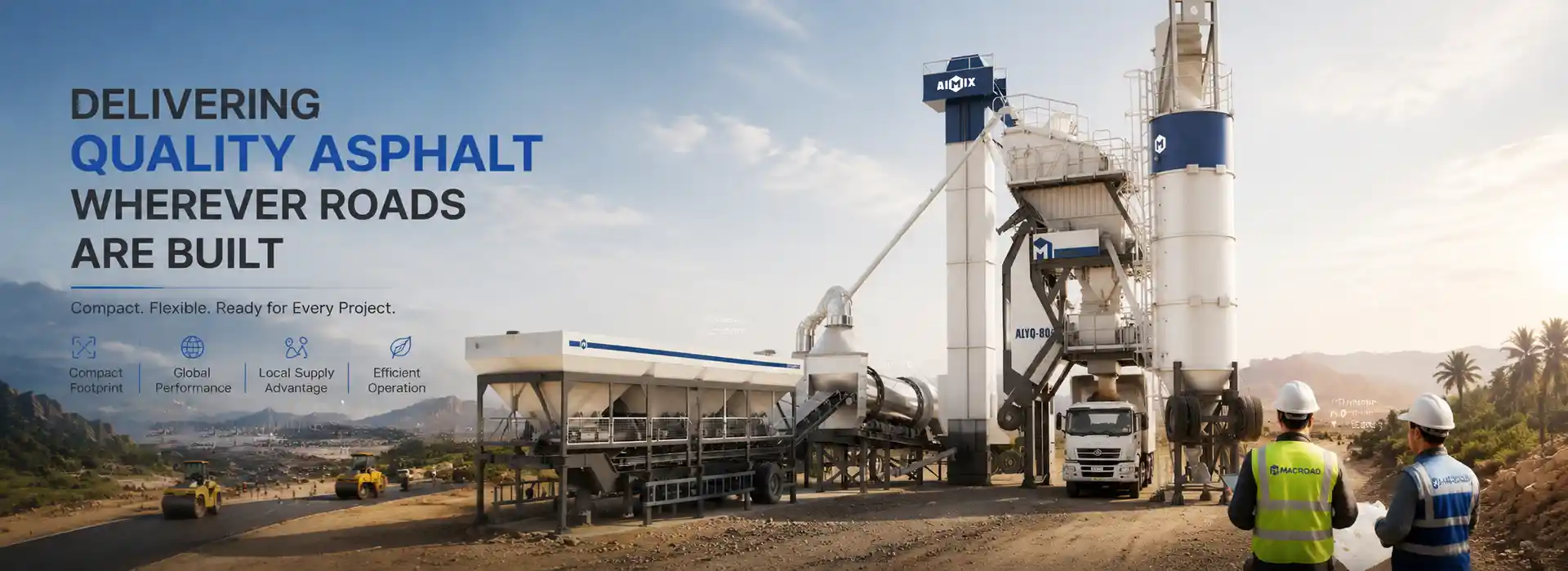
Consider The Paving Rate, Not Just Total Quantity
Total asphalt demand is only one part of the calculation. Contractors also need to consider how quickly the paving crew can place and compact the mixture.
If a paver can continuously place around 50 tonnes per hour, an asphalt plant producing only 25 tonnes per hour may create a supply shortage. Conversely, producing much more asphalt than the paving operation can consume may create unnecessary stockpiling and temperature management issues.
Therefore, the asphalt plant, trucks, paver, and rollers should operate as one production system.
| Project Condition | Potential Small-Plant Advantage | Main Point To Check |
|---|---|---|
| Rural road rehabilitation | Production can move closer to the paving area | Daily asphalt demand |
| Remote municipal road construction | Less dependence on distant commercial suppliers | Aggregate and fuel availability |
| Multi-phase road maintenance | Production can follow the construction schedule | Mobility and relocation requirements |
| Large continuous road project | Compact equipment may simplify some logistics | Whether output can match paving demand |
Small Asphalt Plant Vs. Buying Asphalt From A Distant Supplier
For remote projects, the most useful comparison is not simply between different plant models. It is between two complete asphalt supply strategies: producing asphalt closer to the project or purchasing finished asphalt from an established supplier.
This distinction matters because the lowest equipment purchase price does not always create the lowest total project cost.
When Buying Asphalt May Still Be Better
Buying asphalt from an established supplier may be the better choice when project demand is low or construction lasts only a short time.
It can also make sense when a reliable supplier operates close to the road site. In that situation, the contractor avoids plant installation, equipment operation, maintenance, fuel management, and additional personnel requirements.
However, the calculation changes when the nearest asphalt supplier is far away. Long delivery cycles can affect both transportation cost and paving continuity.
When Local Production Becomes More Attractive
Local asphalt production becomes more attractive when the project requires regular asphalt deliveries and the commercial plant is far from the construction site.
The contractor gains greater control over production timing. The plant can produce according to the paving schedule instead of depending entirely on another supplier’s truck availability.
Moreover, shorter asphalt transport distances can simplify temperature management and reduce long-distance delivery cycles.
This does not mean that local production will always cost less. The correct decision requires a comparison of the complete supply chain.
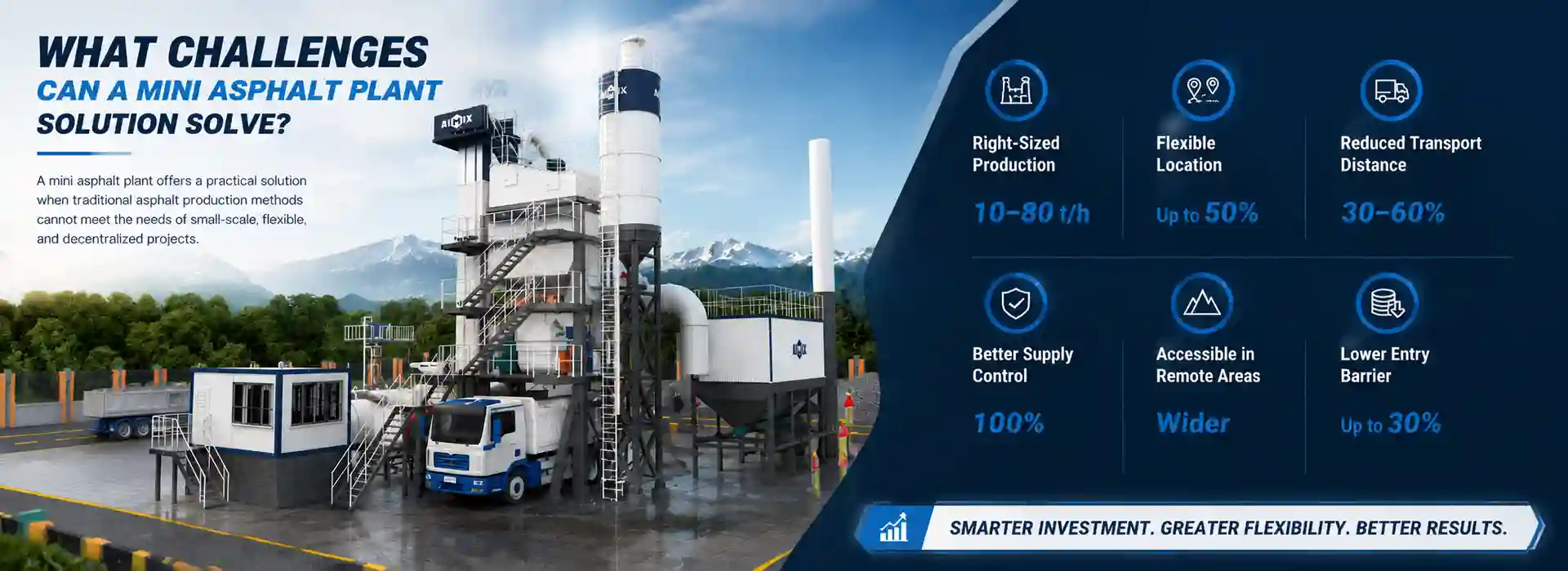
Should A Remote Project Use A Mobile Or Stationary Small Asphalt Plant?
Once a small plant becomes a potential solution, the next decision concerns plant configuration. This choice depends heavily on what the contractor plans to do after the current road project.
Mobile Plants For Moving Projects
A mobile asphalt mixing plant can be attractive when the contractor expects to move between road sections or municipal projects.
This configuration can be particularly useful for contractors that win several smaller road projects in different remote locations. Instead of establishing a permanent production base for every project, the contractor can move the equipment as construction requirements change.
However, mobility does not eliminate site preparation. The contractor still needs an appropriate working area, material storage, access roads, utilities, drainage, and safe truck circulation.
Stationary Plants For Longer-Term Production
A stationary small asphalt plant may be more suitable when the contractor expects to remain in one location for a long period.
A fixed setup can support organized aggregate storage and stable material handling. It can also serve several nearby municipal road projects from one production location.
Therefore, the decision comes down to a practical question: does the contractor need production at one location or production that follows the construction area?
What Site Conditions Should Be Checked Before Installation?
Remote locations can look suitable from a distance but create practical problems during equipment delivery and installation. A site assessment should therefore take place before the final equipment configuration is confirmed.
Check Access For Plant Components
Transport vehicles need to reach the site safely. Narrow bridges, steep roads, weak road surfaces, tight turns, and seasonal access problems can affect delivery planning.
The contractor should also determine whether cranes or other lifting equipment can operate safely during installation.
Check Aggregate And Fuel Storage
A small asphalt plant still needs a reliable flow of raw materials. Aggregate storage should provide enough working capacity for the planned production schedule.
Fuel supply requires similar attention. Remote projects may have limited fuel infrastructure. The contractor should calculate expected consumption, delivery frequency, and storage requirements before production begins.
Check Power, Water, Drainage, And Weather
Depending on the plant configuration, electrical power may come from the local grid or a generator. The site should provide sufficient power for the control system and auxiliary equipment.
Water management also matters during site preparation and operation. In areas with heavy rainfall, drainage becomes especially important. Standing water can damage access roads and create problems around aggregate storage and foundations.
These details may seem minor during the planning stage. In reality, they can determine whether a remote asphalt plant operates smoothly after installation.
What Are The Main Risks Of Using A Small Asphalt Plant?
A small plant can solve several remote-project problems, but it does not automatically guarantee lower costs or higher productivity. Contractors should also understand the main risks before making a purchase decision.
Underestimating Required Capacity
The first risk is selecting a plant based only on average daily demand.
If the paving schedule includes several high-output days, the plant may struggle to maintain continuous supply. A reasonable production margin can help absorb normal downtime and changes in the construction schedule.
Ignoring The Truck-Paver Balance
The asphalt plant can produce material continuously, but the project still depends on transportation. Too few trucks can interrupt paving. Too many trucks can create unnecessary waiting and operating costs.
For remote projects, truck travel time deserves particular attention. A small plant does not solve a transport bottleneck if trucks still need to travel long distances between the plant and paving site.
Focusing Only On Purchase Price
Equipment price represents only one part of the investment. Contractors should also consider transportation, installation, fuel, labor, maintenance, spare parts, relocation, and future reuse.
For contractors comparing a small asphalt plant for sale, this broader calculation is more useful than comparing equipment prices alone.
The final decision should reflect the total cost of producing and delivering asphalt throughout the project.
How To Evaluate The Total Cost Of A Small Asphalt Plant
A practical evaluation should compare the complete cost of local production with the delivered cost of purchased asphalt.
Local production costs may include:
- Plant purchase or rental cost
- Transportation and installation
- Aggregate and filler
- Bitumen and other mixture materials
- Fuel or electricity
- Operators and maintenance personnel
- Routine maintenance and spare parts
- Site preparation and operating infrastructure
- Relocation costs when the plant needs to move
The delivered asphalt option should also include more than the supplier’s material price. It should include truck transportation, driver costs, waiting time, delivery delays, and the potential effect of long-distance hauling on paving efficiency.
Then compare both options across the entire project duration.
For example, if a contractor needs only 500 tonnes of asphalt, buying from a nearby supplier may remain the simpler solution. If the contractor needs several thousand tonnes over multiple months and the nearest reliable supplier is far away, local production deserves a much closer financial evaluation.
The right comparison is therefore not plant price versus asphalt price. It is total project asphalt cost versus total project asphalt cost.
How Supplier Support Affects A Remote Asphalt Project
Equipment selection is only one part of a remote asphalt project. Support after delivery can also affect project continuity.
Remote contractors may have fewer local technicians and fewer spare-parts sources. Therefore, technical communication, installation guidance, commissioning support, operator training, and spare-parts planning should be considered before placing an order.
When comparing an asphalt plant supplier, contractors should ask practical questions rather than focus only on the machine specification.
Questions Worth Asking Before Purchase
- What is the realistic output under the expected working conditions?
- What site preparation does the plant require?
- How will the plant be transported to the remote location?
- What fuel and power conditions does it require?
- Which spare parts should be prepared before production starts?
- What commissioning and operator training are included?
- How will technical support be provided if the project site is far away?
- Can the plant be relocated if another municipal project follows?
These questions help contractors evaluate the complete equipment solution rather than just the machine itself.
When Is A Small Asphalt Plant A Good Fit?
Based on these factors, a small asphalt plant is generally worth considering when several conditions occur at the same time.
- The road project is far from a reliable commercial asphalt supplier.
- The project requires regular asphalt production rather than occasional deliveries.
- The daily asphalt demand fits the plant’s practical output range.
- Suitable aggregate can be sourced within a reasonable distance.
- The project lasts long enough to justify equipment and operating costs.
- The contractor has access to operators, fuel, maintenance, and spare parts.
- The site provides sufficient space for production and material storage.
- A mobile configuration can provide additional value if several remote projects follow.
When most of these conditions apply, local asphalt production can provide greater control over the construction schedule and reduce dependence on long-distance asphalt deliveries.
When Should You Choose A Larger Plant Instead?
A small plant is not the right answer for every municipal road project. If the project requires very high output during sustained paving operations, a higher-capacity plant may be more appropriate.
The same applies to major highway projects with strict production schedules. A plant that cannot keep pace with the paver can create costly interruptions.
Therefore, contractors should start with the required paving rate and daily production target. They should then select a plant that provides enough practical output without creating excessive unused capacity.
Capacity should also reflect future work. A contractor with several municipal road contracts may benefit from a plant that can serve multiple projects rather than a machine selected only for one small road section.
Final Decision: Is A Small Asphalt Plant Suitable?
Yes, a small asphalt plant can be highly suitable for remote municipal road projects, especially when asphalt would otherwise need to travel a long distance from a commercial supplier.
Its value comes from more than compact equipment size. The main advantage is the ability to bring asphalt production closer to the road construction operation.
However, suitability depends on the complete project system. Contractors should evaluate asphalt demand, paving rate, hauling distance, aggregate availability, fuel supply, site conditions, project duration, plant mobility, technical support, and total operating cost together.
A small plant is usually a stronger choice when the project has moderate asphalt demand, long delivery distances, repeated paving work, and suitable local material resources. For very large and continuous projects, a higher-capacity plant may provide better productivity.
Ultimately, the best asphalt solution is not necessarily the plant with the largest capacity or the lowest purchase price. It is the plant that matches the project’s actual production rhythm, site conditions, and logistics.
Plan Your Remote Municipal Road Project Around Real Production Needs
If you are evaluating a small asphalt plant for a remote municipal road project, start with your actual numbers. Estimate the total asphalt quantity, required daily output, paving schedule, transport distance, available aggregate, fuel conditions, and expected project duration.
Then compare local asphalt production with the delivered cost and logistical risks of buying asphalt from a distant supplier. This gives your project team a clearer basis for choosing between a small stationary plant, a mobile solution, or a larger production system.
Most importantly, do not select the plant based on capacity alone. A technically suitable solution should also fit the road access, raw material supply, truck cycle, paving rate, labor conditions, and future project plans.
The right asphalt plant should fit the road project—not force the road project to fit the plant. Share your expected asphalt output, project location, road length, paving schedule, aggregate conditions, and relocation requirements with an experienced equipment team. These details can help determine a practical plant capacity and configuration before you commit to the investment.